
Nano Computational Modelling

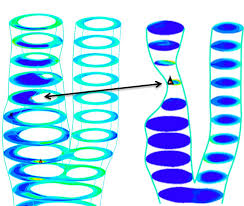
Computational Modelling in Nano technology is the computational of materials science that have been made in the last decade as inventers and engineers strive to infuse continuum-based models with more-realistic specifics at quantum and atomistic scales. It play important role in the field of nanoencapsulation, nanoemulsions, nano packaging, nano conveyance frameworks and other imaginative applications.

Comments

Popular posts from this blog

List of Nanotechnology_2020 Speakers Note: Only 8Speaker slotsa re available to fit into Scientific Program, to book your speaker slot you can contact us at: Email:  nanotech@heraldmeetings.org WhatSapp: +1 609-540-7643 To submit your abstract visit:  https://nanotechnology.heraldmeetings.com/submit-abstract To register visit:  https://nanotechnology.heraldmeetings.com/registration speakers

High-entropy nanoparticles hold promise for catalytic applications

Alloying is a magic trick used to produce new materials by synergistically mixing at least two metallic elements to form a solid solution. Recent developments in science have found great applications of alloy materials in catalysis, for which nanometer scale bi- or tri-metallic particles are used to accelerate the rate of chemical reactions . But the application of alloys as catalysts is limited by so-called "miscibility," as not any arbitrary combination of elements can form a homogeneous alloy, neither for robust tuning of the ratio between the two components. For abstract submission visit:  https://bit.ly/2Kv6Sm8

Nano-thermometer takes temperature inside cells

INTERNATIONAL CONFERENCE ON   NANOTECHNOLOGY AND NANOMATERIALS brings here to discuss on topic  Nano-thermometer takes temperature inside cells. Scientists have developed a nano-thermometer able to take temperatures inside cells. The technique takes advantage of the fluorescent properties of a modified molecular rotor and the viscosity of the cell. For further queries mail us at :  nanotech@heraldmeetings.org  \